
Work activities
Model physical, cost-loaded execution using an S-curve, Linear distribution or Manual Work schedule. Work activities determine project Work duration and can carry subcontract payment terms.
Construction cash-flow simulation
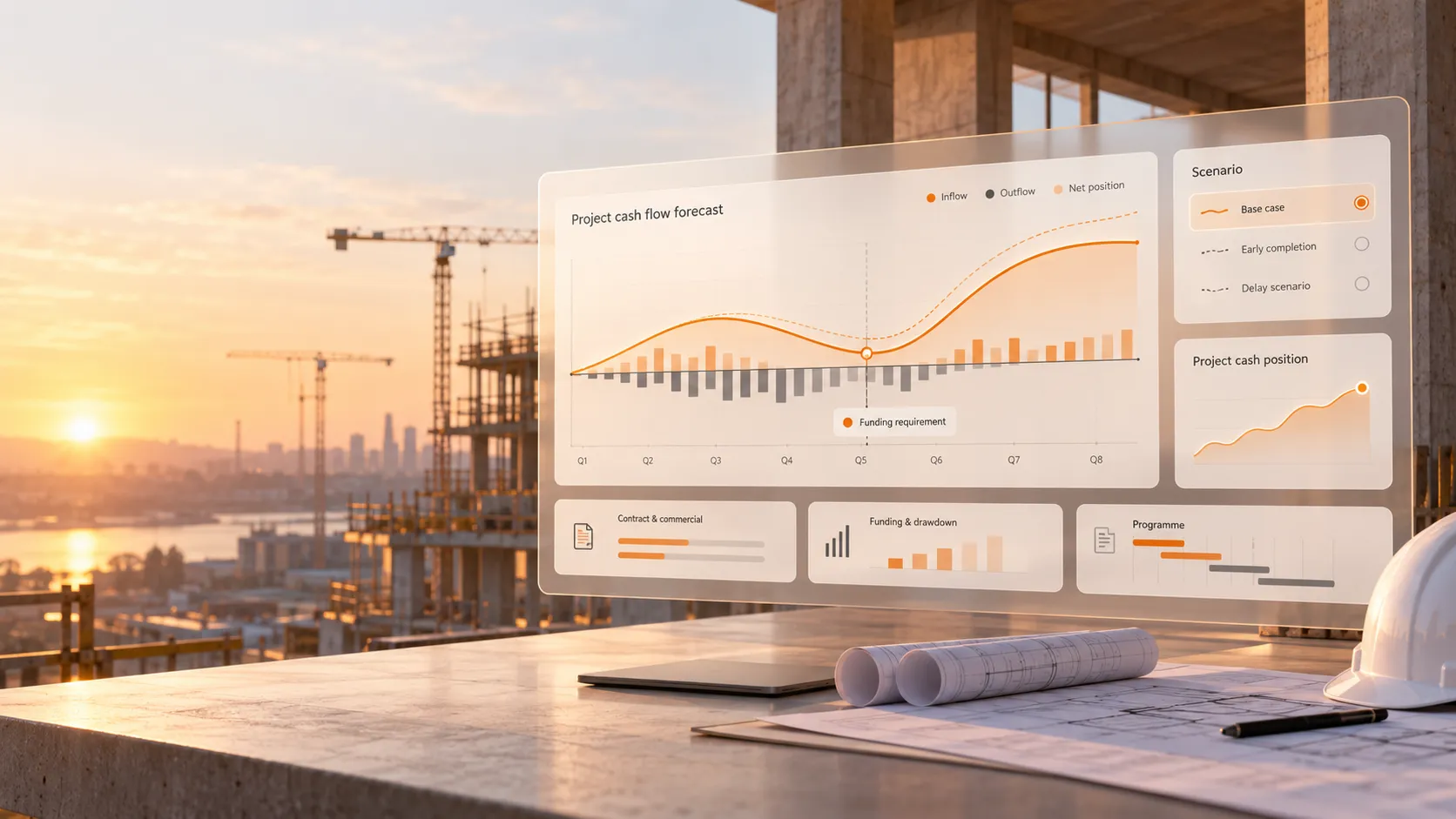
CashflowPot helps construction teams, finance teams and lenders understand project receipts, project costs, funding requirements and financed cash position without waiting for a detailed programme to be created or rebuilt for every financial decision.
Model Work activities, direct Scheduled Cost, client commercial terms and explicit financing facilities, then revise the scenario as the project changes.
Execution and cost
Model physical, cost-loaded execution using an S-curve, Linear distribution or Manual Work schedule. Work activities determine project Work duration and can carry subcontract payment terms.
Place equipment, materials or other discrete project expenditure directly into chosen project periods. Scheduled Cost creates project outflow and funding need without creating physical work, client PPC or extra Work duration.
Two ways to model contract inflow
Default and recommended for new scenarios. Contract value follows its own linear or balanced S-curve over the Work activity execution duration. You can make the S-curve Back-loaded, Balanced or Front-loaded, then apply client contract terms and forecasting assumptions.
Use the combined Work activity execution profile as the shape for contract value when expected client-side value should follow the Work pattern. Scheduled Cost is excluded from the Work denominator and does not create client value.
Financing facilities
Place financing on top of the project cashflow instead of hiding it inside one interest assumption.
Built for decisions, not one workflow
Estimate funding exposure before a detailed resource-loaded tender programme exists, and compare several opportunities when deciding what the business can finance.
Prepare a project funding view for banks and financing discussions, then test how payment period, retention, advance recovery, Scheduled Cost and facility terms affect the requirement.
Recreate a contractor cash-flow view with explicit contract terms, assumptions and financing facilities, then challenge the timing and adequacy of the proposed funding.
Reforecast the remaining cash position when the programme, procurement timing or financing structure has changed and historic loading no longer represents the current commercial reality.
Execution and cash are different layers
Planning software can provide detailed programme information and time-phased work or cost. CashflowPot focuses on the commercial and financing layers that follow: how execution, project costs, contract terms and forecasting assumptions translate into billings, receipts, payments and funding requirements.
When detailed planning data is current, it can inform activity timing. When it is unavailable, disproportionate to the decision, or stale, CashflowPot can use a focused mathematical execution profile instead.
Contract terms and assumptions
Current result view
Project Cashflow shows client receipts and project cost. Facilities shows each facility's Draw, Repayment, Interest & fees and Outstanding balance. Cash Position brings them together into Total inflow, Total outflow, Net cash flow and Closing cash balance.
Decision KPIs
Professional output
Export a structured Excel schedule with activities, Project Cashflow, Facilities, Cash Position, KPIs, charts and reconciliation for management, tender, financing or lender review.
A forecast designed to be revised.
Build the cash-flow view needed for the decision now, then reforecast as activities, Scheduled Cost, contract terms and financing assumptions change.
Near-term direction
AI-assisted project setup is in development. The goal is to turn a project description, value, scope and duration into proposed Work activities, Scheduled Cost, financing assumptions and starting terms for review. The CashflowPot calculation engine remains responsible for the forecast.